- Sultan Pur, Southern Bypass, Budhla Link Road, Multan
- +92320-0884480-81-82
- info@thesultanfoundation.org.pk

Core Mechanics of Chance and Strategy
Master the Odds: Top Casino Games That Keep Players Coming Back
Tired of predictable nights in where you control nothing? Casino games solve that by handing you the action with every spin, card flip, or dice roll, letting chance decide the thrill. You pick your game, place a bet, and let the built-in rules and odds determine whether you win or walk away with an adrenaline rush. Whether it’s the mindless fun of a slot machine or the strategic decisions at blackjack, these games turn waiting into pure entertainment with no extra setup needed.
Core Mechanics of Chance and Strategy
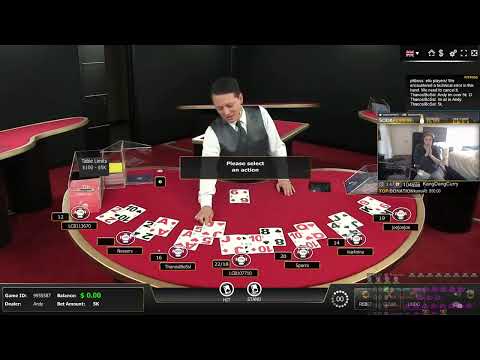
In casino games, the core mechanics balance pure chance against player-controlled strategy. Games like roulette and slots are dominated by random chance, where each spin or deal is an independent event with fixed odds. Conversely, poker and blackjack introduce strategic elements; in blackjack, basic strategy dictates when to hit or stand based on your hand and the dealer’s upcard, mathematically reducing the house edge to below 1%. The key distinction is that strategy cannot eliminate the house edge but can optimize your odds within the probabilistic framework. Q: How does a player use strategy in a chance-based game like blackjack? A: By applying fixed rules for playing decisions based on the deck composition, the player shifts the probability of winning slightly in their favor, though the outcome of a single hand remains random. Mastering this interplay between luck and calculated choice is essential for practical play.
How Random Number Generators Shape Outcomes
Random Number Generators (RNGs) are the invisible engines that dictate every spin of the reels or shuffle of the digital deck, ensuring each outcome is statistically independent from the last. By cycling through billions of possible sequences per second, the RNG determines exactly when you click “spin” and which numbers align to produce a win or loss. This process creates a chaotic, unpredictable flow, making it impossible to predict or influence the next result. True randomness eliminates all patterns, meaning past losses have zero bearing on future chances. RNG algorithms define volatility, as a slot’s payout frequency is mathematically coded into the generator’s selected number ranges, directly shaping your risk-reward experience through its long-term hit rate.
Q: How does an RNG make a slot machine pay out at a specific time?
The RNG constantly generates numbers; the moment you press the button, it captures the current number and maps it to a casino usa game outcome. A “win” occurs only when that number lands within a pre-set, small percentage of the total range—this is how the house edge is enforced without altering the fundamental randomness.
House Edge Versus Player Odds Across Formats
The house edge dictates the statistical advantage built into every wager, manifesting differently across formats. In table games like blackjack, basic strategy optimization can pull player odds close to a 0.5% house edge, whereas a slot machine’s fixed paytable ensures a 5–15% edge regardless of player choices. Video poker allows strategic influence, but the edge remains positive for the house unless a rare paytable shift occurs. Roulette’s edge is static at 5.26% for double-zero wheels versus 2.70% for single-zero, proving format directly shifts the player’s odds of long-term survival.
The Role of Volatility in Payout Frequency
Volatility directly dictates your payout frequency. Low volatility games dish out small, frequent wins to keep your bankroll steady, while high volatility slots produce rare but massive payouts, creating long dry spells punctuated by thrilling spikes. This trade-off means choosing the right volatility level is a core strategic decision. For example, a low-volatility blackjack variant might pay 1:1 often, whereas a high-volatility slot can go hundreds of spins before hitting a multiplier jackpot.
Q: How does volatility affect how often I win?
A: It’s a direct link. High volatility reduces your payout frequency—you win less often, but when you do, the wins are substantially larger. Low volatility increases payout frequency, giving you smaller, more predictable returns.

Categorizing Popular Table Experiences
Categorizing popular table experiences in casino games hinges on the distinct tension between player agency and chance. Blackjack and baccarat fall into the “decision-driven” group, where your choices directly shape the outcome. Conversely, roulette belongs to the “pure fate” category, offering no control but high spectacle. A key insight emerges for table selection:
Your risk tolerance dictates the ideal table category—choose skill-based games for strategic engagement, pure-luck tables for effortless thrill.
Poker stands apart as a “social battleground,” where reading opponents matters more than the cards. Craps combines both, with a chaotic energy from communal betting. Understanding these categories helps you instantly match your mood—focused competition or relaxed chance—to the right table experience.
Cards, Dice, and Wheels: Classic Standbys
Cards, dice, and wheels form the tactile core of casino gaming, each offering distinct mechanics. Card games like blackjack and baccarat rely on drawn values and player decisions, while dice craps pivots on probability across a table. The wheel, iconic in roulette, determines outcomes via a spinning ball and numbered slots. These classic standbys avoid digital interfaces, relying instead on physical physics and human choices, creating immediate, high-energy interaction. Their rules are straightforward, yet strategic depth varies widely, from simple betting to counting cards.
Cards, dice, and wheels are the hands-on pillars of casino tables, blending instant physical action with timeless risk and reward.
Digital Adaptations of Traditional Games
Digital adaptations of traditional casino games replicate the tactile feel of physical tables through sophisticated Random Number Generators and high-definition live streams. Players interact with digital blackjack, roulette, and baccarat via intuitive interfaces that track betting history and offer auto-play options. These versions preserve core rules while adding features like multi-table play and customizable speed settings, making classic experiences accessible from any device. The key advantage is seamless mobile gameplay that mirrors real-world probability, removing travel time without altering strategic depth.
Digital adaptations faithfully recreate traditional game mechanics in responsive interfaces, enabling authentic table experiences anywhere without diluting rules or randomness.
Side Bets and Progressive Jackpots
Side bets in table games, such as blackjack’s “21+3” or craps’ “Fire Bet,” offer rapid resolution with high payouts but typically carry a significantly elevated house edge compared to the main wager. Progressive jackpot side bets aggregate a portion of every qualifying bet into a growing prize pool, often requiring a maximum bet to qualify for the top tier. These bets introduce a lottery-like dynamic into standard play, substituting consistent odds for the chance of a life-changing win, yet they are logically reserved for entertainment rather than strategic bankroll building.
- Payout odds for progressive side bets often decrease as the jackpot grows, reducing long-term expected return.
- Most progressive jackpots reset to a base amount after being hit, altering the bet’s immediate value.
- Side bets frequently use proprietary payout tables, making direct house edge calculation essential before placing them.
- Progressive contributions are usually capped, so exceeding the minimum qualifying bet does not improve odds.
Virtual and Live Dealer Platforms
Virtual and live dealer platforms offer distinct ways to experience casino games. Virtual platforms use Random Number Generators to determine outcomes, providing fast-paced play on slots, blackjack, and roulette. In contrast, live dealer platforms stream real-time video from a studio, where a human dealer handles physical cards or wheels, fostering a social atmosphere through chat. Players interact directly with the dealer and other players. Virtual platforms are ideal for solo, rapid sessions, while live dealer options suit those wanting a realistic casino feel from home. Both require a stable internet connection, though live streaming demands higher bandwidth for smooth gameplay. Game selection varies, with virtual offering thousands of titles and live focusing on classics like baccarat and poker.
Streaming Real-Time Interaction from Studios
In streaming real-time interaction from studios, players connect directly with a human dealer via HD video feeds, bridging the gap between digital convenience and authentic casino atmosphere. You see every card shuffle and roulette spin as it happens, while a live chat function lets you converse with the dealer and other players. This setup eliminates Random Number Generator skepticism because outcomes rely on physical equipment. Studios are designed with multiple camera angles, ensuring you never miss a crucial hand. Does streaming create delay issues? No, because studios use low-latency encoding so your bets and dealer responses sync instantly, preserving the pace of real gameplay.
Mobile-Optimized Interface Trends
Modern casino platforms now prioritize thumb-friendly navigation, restructuring live dealer lobbies so that buttons, chat boxes, and betting panels sit within the lower third of the screen for one-handed play. These interfaces employ dynamic scaling, automatically resizing game tables and video streams to prevent pinch-to-zoom frustration. A key advancement is gesture-based betting, where swipes replace multiple taps for placing or doubling wagers during a live round, while persistent floating menus keep chip selections and history visible without obscuring the dealer feed. Such design eliminates clutter, ensuring that every tap directly serves the game action.
- Vertical swipe controls for rapid chip denomination changes
- Persistent dealer video window that does not minimize during bets
- Haptic feedback integration for confirmed bet placement
Chat Features and Social Dynamics at Tables
Live dealer platforms integrate chat features that fundamentally alter table dynamics, allowing players to send emojis or text to the dealer and, in some games, to other seated participants. This real-time interaction mimics a physical casino’s social banter, yet it introduces a unique pacing: a player’s strategic timing, such as a bet placed immediately after a dealer’s friendly reply, can subtly influence the table’s rhythm. The social player engagement shifts from solitary decision-making to a semi-public performance, where reactions to wins or losses become visible to the group, often encouraging table-wide high-low betting patterns or cautious play based on perceived dealer rapport.
Chat features convert virtual tables into social arenas, where player-dealer interaction and peer visibility directly shape betting behavior and table rhythm.
Bankroll Management and Betting Systems
Bankroll management is your survival kit in casino games: decide a loss limit before you play and never chase that money. A betting system like the Martingale (doubling after a loss) might feel smart, but it only works until a bad streak wipes your bankroll. Q: Does a betting system guarantee profit? A: Not at all—systems can’t beat the house edge, they just structure your bets. Stick to flat betting for longer sessions, and treat any system as a fun rhythm, not a winning strategy.
Unit Sizing for Extended Play Sessions
For extended play sessions, unit sizing dictates survival. Your base unit should be a mere fraction—typically 0.5% to 1%—of your total session bankroll to withstand inevitable variance without depleting funds. Strategic unit reduction during downswings preserves your capital, while cautious increases during hot streaks capitalize on momentum without excessive risk. A session’s full duration remains unpredictable, so a smaller unit ensures you endure both the longest cold spells and the emotional fatigue of marathon play.

| Session Goal | Unit Size (% of Bankroll) | Result on Bankroll |
|---|---|---|
| Low risk (4+ hours) | 0.5% | High endurance, small swings |
| Moderate risk (2–4 hours) | 1.0% | Balanced action and safety |
| Aggressive (under 2 hours) | 2.5% | Short burst, high volatility |
Flat Bets Versus Progressive Wagering Approaches
Flat betting, wagering a consistent amount each round, prioritizes bankroll longevity and emotional stability over chasing losses. Progressive systems like the Martingale double bets after a loss, risking rapid depletion to recover previous stakes. While flat bets offer predictable session limits, progressive approaches theoretically exploit winning streaks but expose players to table limits and severe drawdowns. The key distinction is that flat betting controls volatility, whereas progressive wagering trades control for the illusion of inevitability.
Flat betting provides discipline and predictable risk, while progressive wagering introduces higher variance with the potential for faster wins or catastrophic losses in casino games.
Fact Versus Fiction in Popular Strategies
The enduring appeal of the Martingale system hinges on a fiction: that infinite funds and table limits allow you to recover all losses with one win. In reality, a short losing streak depletes your bankroll or hits the table maximum, creating massive, unrecoverable debt. Similarly, “hot” and “cold” streaks are a fiction in independent trials like roulette spins; each outcome is statistically unrelated to the last. The only proven fiction in bankroll management is that any positive progression system can overcome the house edge. Accept that no betting pattern alters the game’s mathematical probability; it only accelerates how fast you win or lose your predetermined funds.
Psychological Triggers in Game Design

Casino game design leverages variable ratio reinforcement, where unpredictable rewards after an unknown number of attempts create a powerful compulsion loop. Near-miss outcomes, where the result appears close to a win, trigger the brain’s reward system similarly to an actual win. Auditory and visual cues, such as celebratory sounds for small payouts, condition players to anticipate larger wins. The illusion of control, through features like “stop” buttons on digital slots, primes players to feel agency over purely random outcomes. These mechanisms exploit dopamine-driven feedback to sustain engagement without requiring skill.
Near-Misses and Reward Schedules
In casino games, near-miss reward scheduling exploits the psychological impact of outcomes that fall just short of a win, such as two matching slot symbols with the third one slightly off. These near-misses are intentionally programmed into variable ratio reward schedules to amplify player engagement by mimicking a win’s neural response. This creates a conditioned expectation that a win is imminent, encouraging continued play despite the actual random outcome. The schedule ensures that losses are interspersed with frequent, small wins to maintain momentum, while near-misses serve as powerful motivational events that increase bet frequency and session duration without altering the house edge.
Visual Cues and Sound Effects That Drive Engagement
In casino game design, auditory-visceral feedback loops hijack attention through precisely timed visual flashes and celebratory sound effects. A slot machine’s spinning reels pause on near-miss symbols, triggering a bright, pulsating glow that suggests imminent victory, while a rising chime builds anticipation before the final outcome. Matching symbols erupt in cascading particle effects and a triumphant jingle, directly rewarding the player’s action with sensory validation. Even a loss is softened by a subtle, descending tone and a dimming of the screen, preventing frustration. These synchronized cues condition players to associate each click with potential reward, making the game itself the hook.
Visual cues and sound effects in casino games create a rapid, sensory feedback loop that reinforces every action, turning simple clicks into emotionally charged moments of near-win or victory, driving sustained play through conditioned anticipation.
Loyalty Programs and Comp Structures
Loyalty programs in casino games exploit the sunk cost fallacy by tying recurring comp structures to player behavior, where accumulated points or tier status directly unlock free spins, cashback, or exclusive tables. These systems create a psychological loop: players continue wagering to preserve or advance their comp status, even when the marginal value of earned rewards is less than the money risked. Comp structures often feature escalating thresholds—such as silver, gold, or platinum tiers—that trigger variable rewards, reinforcing play through intermittent comp bonuses rather than consistent payouts. This dependency on earned comps anchors the player’s perception of value to continued engagement, not to winning.
Regulatory Landscape and Fair Play
In a dimly lit casino floor, a player watches the roulette wheel spin, trusting that the outcome isn’t rigged. That trust is the bedrock of fair play in casino games. The regulatory landscape for casino games is the invisible referee ensuring every card dealt and every slot spin is truly random, governed by certified RNGs and strict game integrity protocols. When a dealer cuts the deck, the casino’s own license—issued by a jurisdiction that mandates regular third-party audits—guarantees the house edge is fixed and transparent. A player relying on a “hot slot” is protected because regulators require payout percentages to match what’s posted, preventing the casino from silently altering odds mid-game. This framework turns gambling from a guess into a measurable contract: the rules are fixed, the math is verified, and every hand dealt is a fair contest under the law.
Licensing Authorities and Audit Standards
Licensing authorities like the Malta Gaming Authority and UK Gambling Commission mandate that casino games undergo independent audit standards to verify random number generator integrity. These audits, performed by firms such as eCOGRA or BMM Testlabs, assess payout percentages and game mechanics against strict technical benchmarks. A certified seal directly indicates the game’s RNG has passed statistical analysis for fairness. Players should note that audit certificates typically expire annually, requiring renewed compliance testing.
- Audit standards require RNG tests to achieve a minimum chi-square score for randomness
- Licensing authorities enforce unannounced server-side audits to prevent game manipulation
- Certified slots display a timestamped audit logo linking to the test report
Responsible Gambling Tools and Limits
Responsible gambling tools impose structured limits on play within casino games, directly mitigating impulsive behavior. Deposit caps, session timers, and loss limits are set pre-play, enforcing a predetermined budget and time boundary. A clear sequential process for implementing these controls is standard: first, the player selects a limit type (e.g., daily deposit); second, the system confirms the chosen amount; third, the limit activates instantly, blocking any breach. To further restrict access, self-exclusion tools allow a player to block their account for a defined period, often irreversible until expiry. Reality checks, as mandatory pop-ups, interrupt gameplay at intervals, forcing a decision to continue or stop. This framework shifts control from game dynamics to user-defined boundaries, analytically reducing risk without removing agency.
Geographic Variations in Legal Status
The legal status of casino games shifts dramatically the moment you cross a border, forcing players to adapt instantly. In some jurisdictions, online slots and live dealer tables are fully accessible via licensed platforms at home, while adjacent regions may restrict them to land-based venues only. This patchwork means a game legal in one state could be illegal a mile away. Players must verify local geographic access rights before logging in. To navigate this:
- Check your current location’s specific prohibition on remote gambling.
- Confirm if peer-to-peer poker or house-banked games are treated differently.
- Identify whether time-limited events, like international cruises, create temporary legal zones.
Ignoring these boundaries risks account suspension or legal penalties.
Advanced Features for Seasoned Players
For seasoned players, the game’s surface is a decoy. You learn to read the volatility-adjusted bet sequencing, where a low-stakes cycle is deliberately broken by a precise bet ramp—triggering a statistical shift in blackjack’s true count or a slot’s bonus buy window. The real edge lives in
ignoring pop-up bonuses to maintain a clean session, letting the algorithm reset its internal rhythm without interference.
I watch the dealer’s shuffle pattern, not the cards; in baccarat, I track how shoes resolve ties across multiple pit shifts. Every click is a calibration of probability against house clock speed—this isn’t luck, it’s systematic pressure against the game’s internal logic.
Multi-Hand and Split-Screen Modes
Multi-Hand and Split-Screen Modes allow experienced players to manage multiple blackjack or baccarat hands simultaneously on a single interface. In Multi-Hand mode, you place independent bets on several hands dealt from the same shoe, accelerating your action-per-hour. Split-Screen Mode divides the display into separate grids, enabling you to run completely different betting strategies on each panel. This setup demands heightened focus to track each hand’s cards and decisions without error. Both modes increase strategic hand management by testing discipline and bankroll control across parallel scenarios.
Multi-Hand and Split-Screen Modes give seasoned players the ability to play several hands at once, boosting game speed and requiring precise, simultaneous decision-making.
Tournament Formats and Leaderboards
For seasoned players, dynamic tournament leaderboards inject a fresh thrill beyond standard play. Formats vary from timed bounties to cumulative score challenges, where each bet or win pushes you up the ranks. Real-time updates let you see exactly who you’re chasing, and many systems feature knockout stages or multiplier races to keep strategy sharp. The leaderboard itself isn’t just a score—it often highlights your personal bests and closest rivals, turning every session into a friendly, competitive chase for top spots.
Tournament formats and leaderboards turn casual play into a head-to-head race, with real-time rankings and varied scoring systems keeping the competition fresh and strategic.
Auto-Play Options and Customized Settings
For seasoned players, automated session customization transforms the grind. You can set auto-play to stop after a single win cap, a loss limit, or whenever a bonus round triggers. Customized settings let you tweak spin speed or pre-select bet levels for each round. A clear sequence for setting this up:
- Open the game’s advanced settings panel.
- Define your loss and win limits for the auto-play cycle.
- Choose a stop condition (e.g., after 50 spins or on a bonus feature).
- Lock in your preferred bet size and spin speed.
These options keep you in control without constant manual clicking.